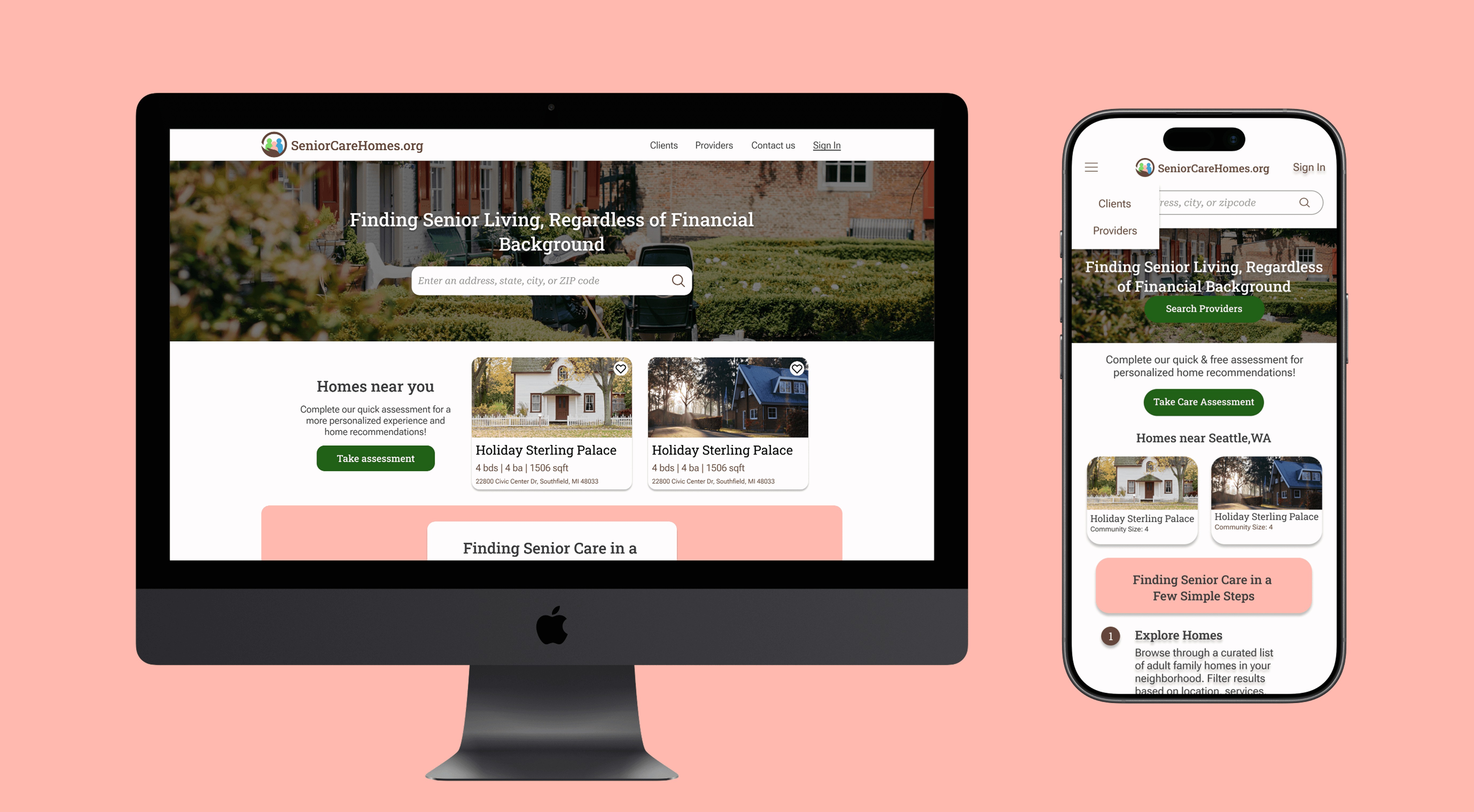
Senior Care Homes: Designing Trust & Transparency
Role
UX/UI Designer
Timeline
July 2023 - September 2024
The Problem Space
Finding quality senior care is a stressful and expensive process. Families typically rely on platforms like Caring.com or hire agents, but these solutions come with significant drawbacks.
Limited options and lack of direct communication between families and providers create frustration on both sides: families struggle to find transparent information, while care providers lose potential clients to intermediaries.
The current process is broken for these core reasons:
Hidden Costs: Agent fees and commissions add significant, non-transparent costs for families.
Lack of Transparency: Existing platforms force users to provide personal data before seeing essential details like pricing and availability.
Communication Barrier: Families and providers cannot connect directly, leading to frustration and lost opportunities.
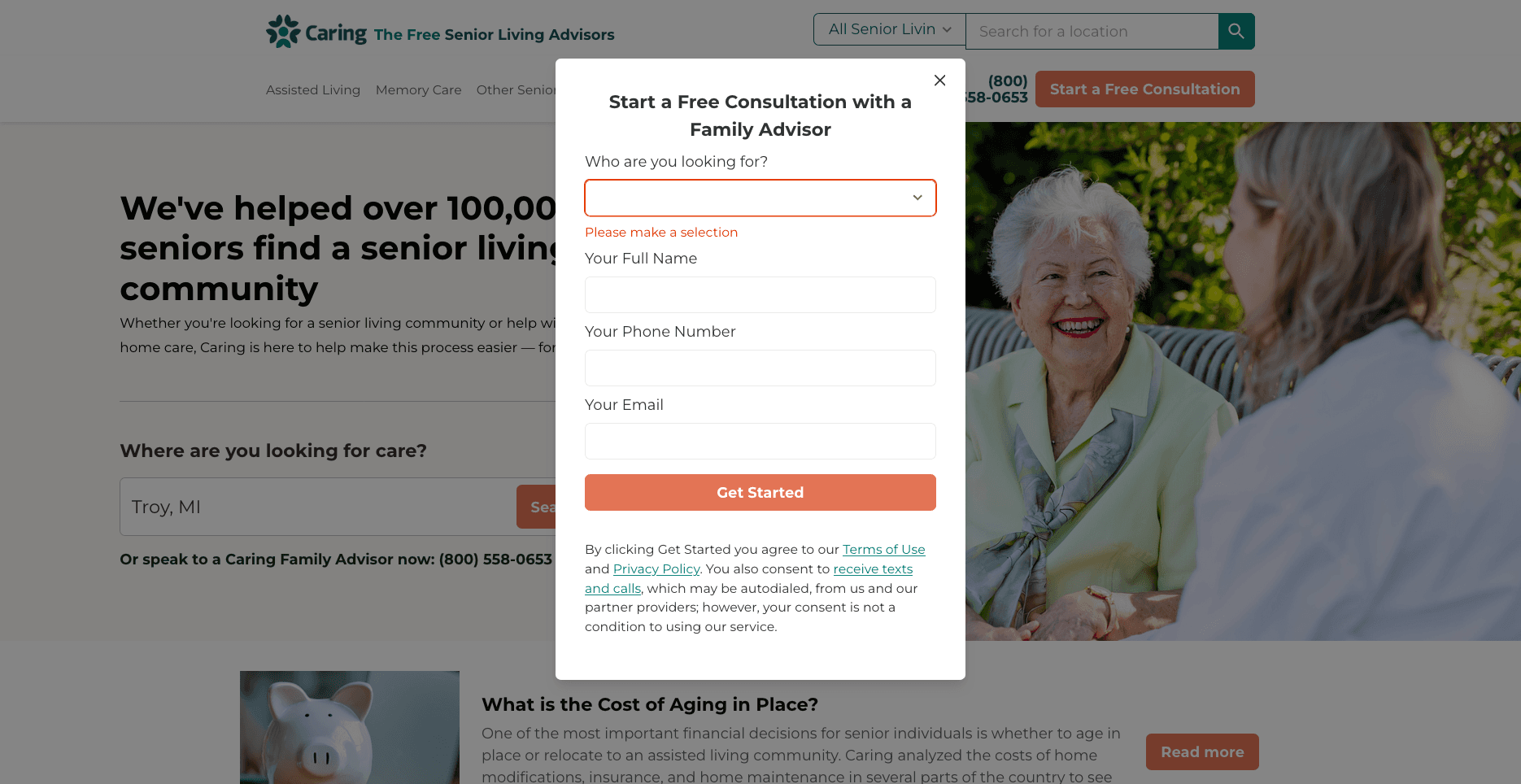
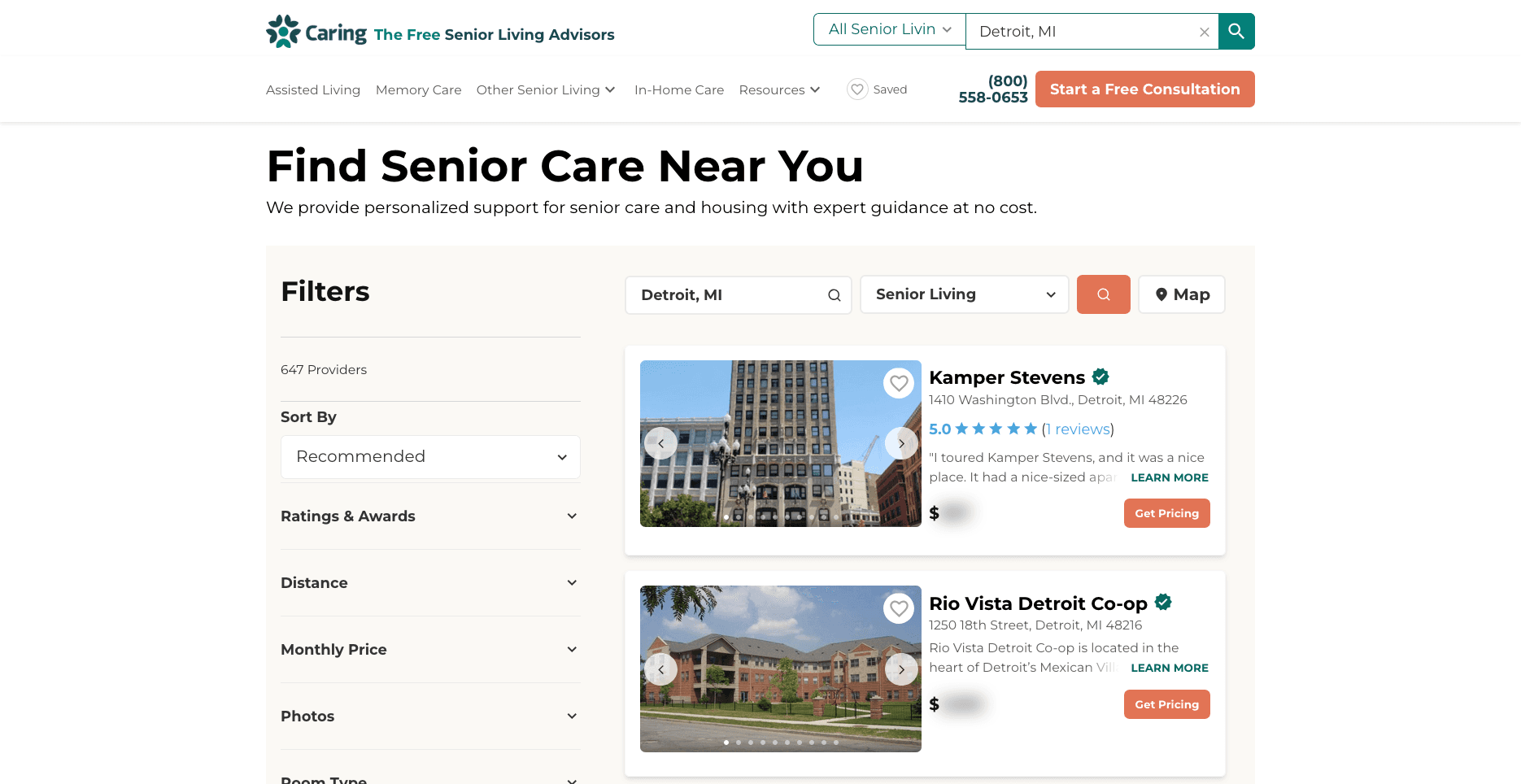
Understanding the landscape
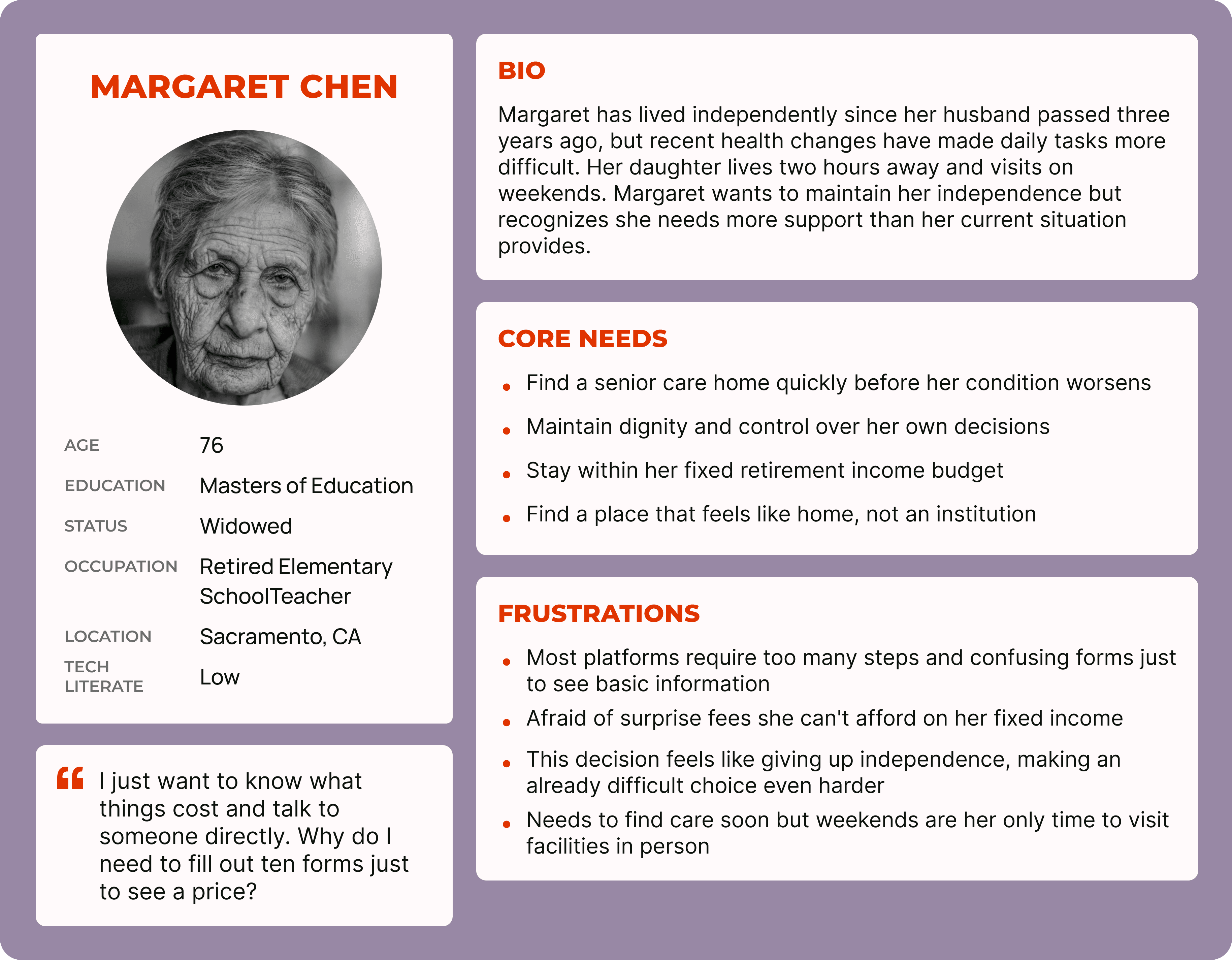
Through initial user research and the creation of targeted personas, such as Margaret Chen (a 76-year-old retired teacher on a fixed income), I synthesized critical insights into the needs of the senior care demographic.
Core User Needs
These discoveries highlighted three fundamental user requirements:
Simplicity over complexity
Financial transparency over hidden fees
Control over when to share personal health information
Core Design Principle: Transparency first
These fundamental user needs directly shaped my primary design principle for the SeniorCareHomes platform: Transparency First. This approach was essential to building confidence and dignity for a vulnerable user base making high-stakes decisions.
This principle guided three key design decisions:
Progressive Disclosure: Respecting user dignity by only requesting personal data when absolutely necessary for the next step, rather than upfront lead generation.
Upfront Pricing: Building user confidence by displaying immediate and clear cost information on provider profiles.
Provider Verification: Signaling safety and trust by clearly indicating verified care providers, eliminating the ambiguity of intermediary agents.
Building trust through transparency
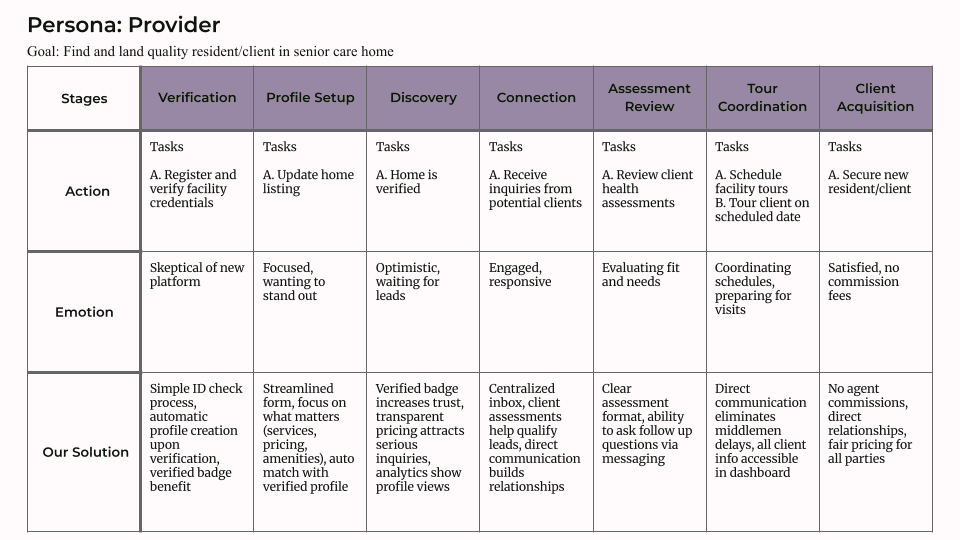
Guided by the principle of Transparency First, I designed two interconnected user journeys that prioritized progressive trust-building and direct communication between families and providers.
Families & Seniors: Progressive Trust-Building
The journey began with low-pressure exploration. Users could browse facilities, view transparent pricing, and save favorites without sharing personal information. Only when they felt confident and ready did they initiate contact through built-in messaging.
The health assessment was split into two stages: a brief 4-question initial assessment to personalize search results, followed by a comprehensive assessment shared only with selected providers. This progression honored users' need for control while gathering necessary information. The journey culminated in scheduling tours and securing placement, all facilitated through direct provider relationships.

Providers: Streamlined Acquisition
The journey started with credential verification through Plaid ID checks. Once verified, providers received a trust badge and could create detailed facility profiles with transparent pricing.
As potential clients reached out via messaging, providers could review health assessments to evaluate fit and respond directly. This eliminated intermediaries, reduced acquisition costs, and enabled providers to build genuine relationships with families. The streamlined process meant faster connections with no agent commission fees.
Bringing Ideas to Form (Low-Fidelity Solutions)
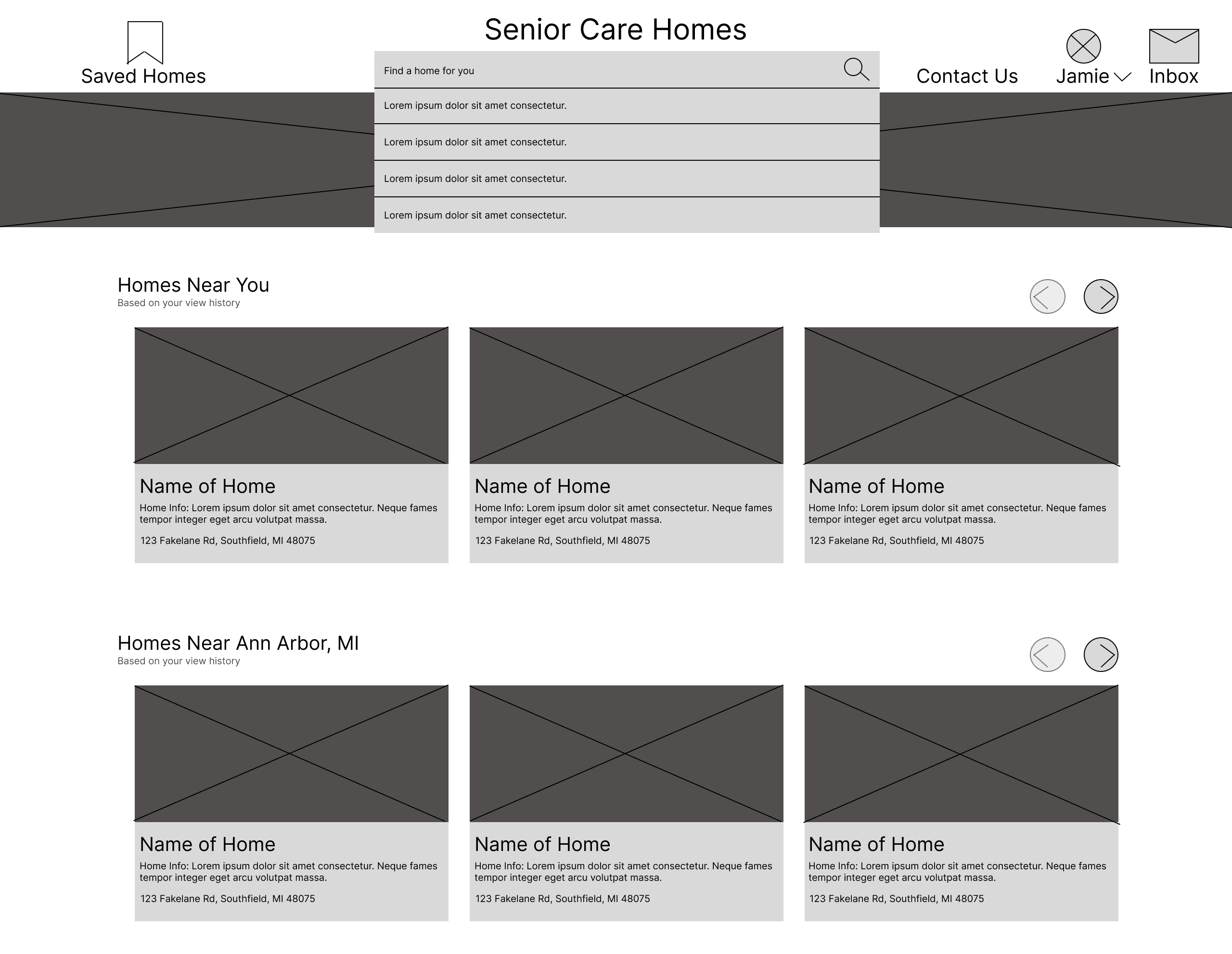
Following the synthesis of user research and the establishment of the Transparency First principle, I moved into the wireframing stage. This allowed me to rapidly test and iterate on the information architecture and core user flows without the distraction of visual styling.
Search & Discovery
The low-fidelity mockups established a robust design featuring both map and list views with prominent filter placement to accommodate different user search styles and ensure control over search criteria.

Facility Listings
The listing wireframes prioritized scannability, structuring the provider card to prominently feature the transparent pricing estimate and the space for the verification badge.

The Final Solution: UI & Experience Deep Dive
Having validated the information architecture through wireframes, the final step was to craft a high-fidelity interface that embodied trust, clarity, and dignity. Using the white, brown, and pink palette, the design minimizes cognitive load and highlights critical information, ensuring the platform is accessible and intuitive.
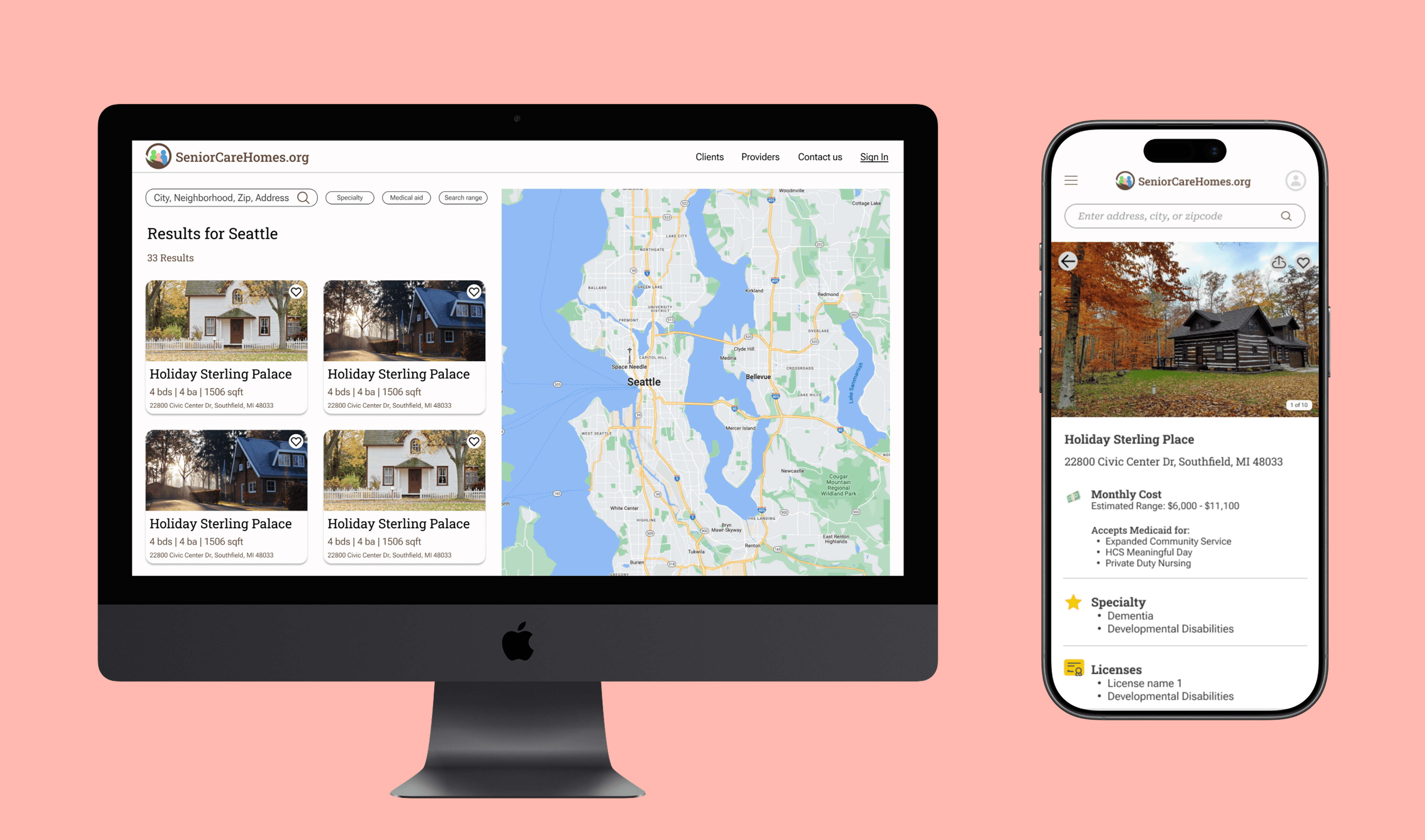
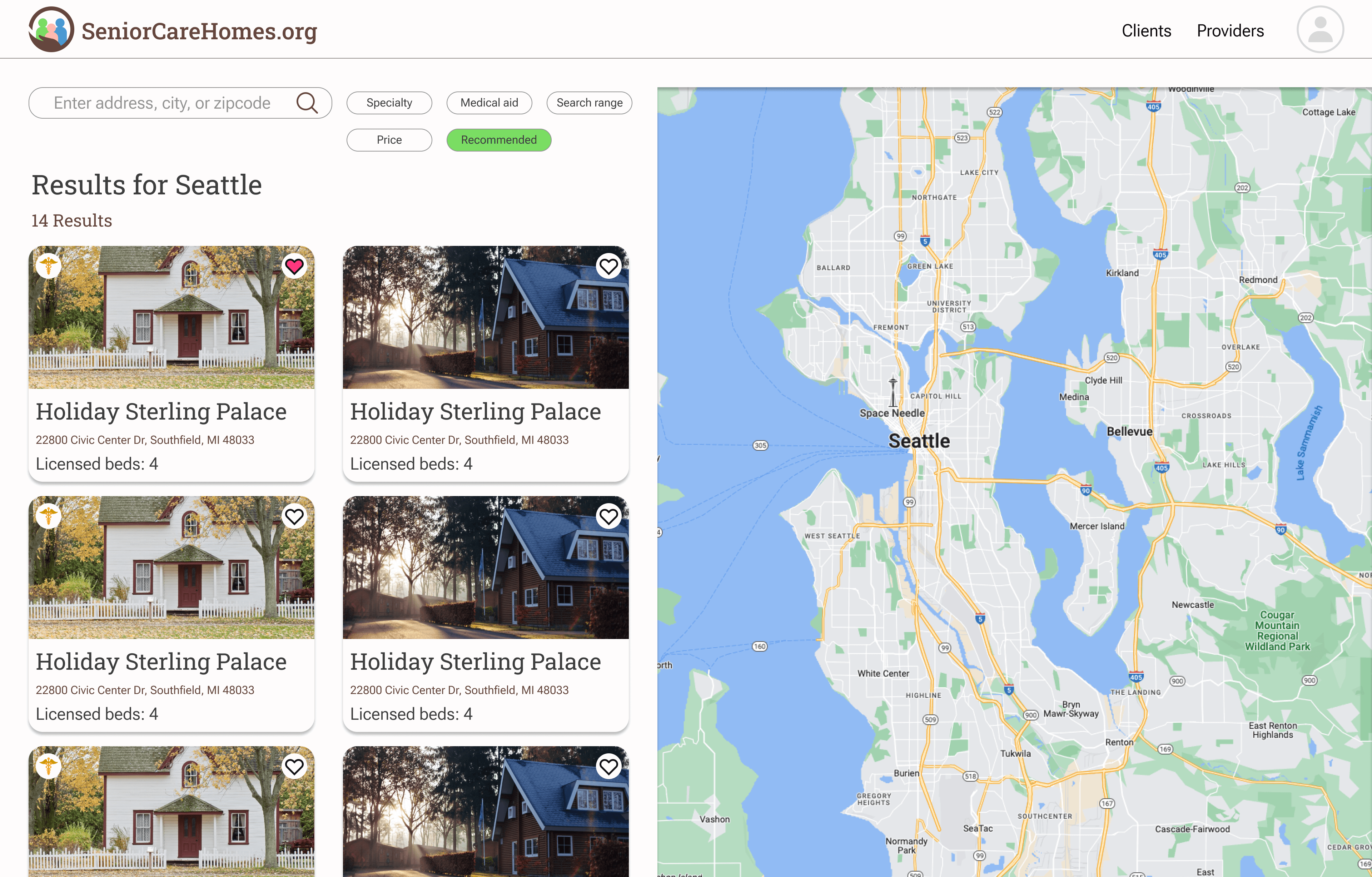
Search & Discovery
The final visual design prioritizes clarity by clearly separating the map-based search results from the home listings, allowing users to quickly scan options while maintaining geographic context. Key actions and pricing ranges are presented prominently, helping users focus on the most relevant decision-making information at a glance.
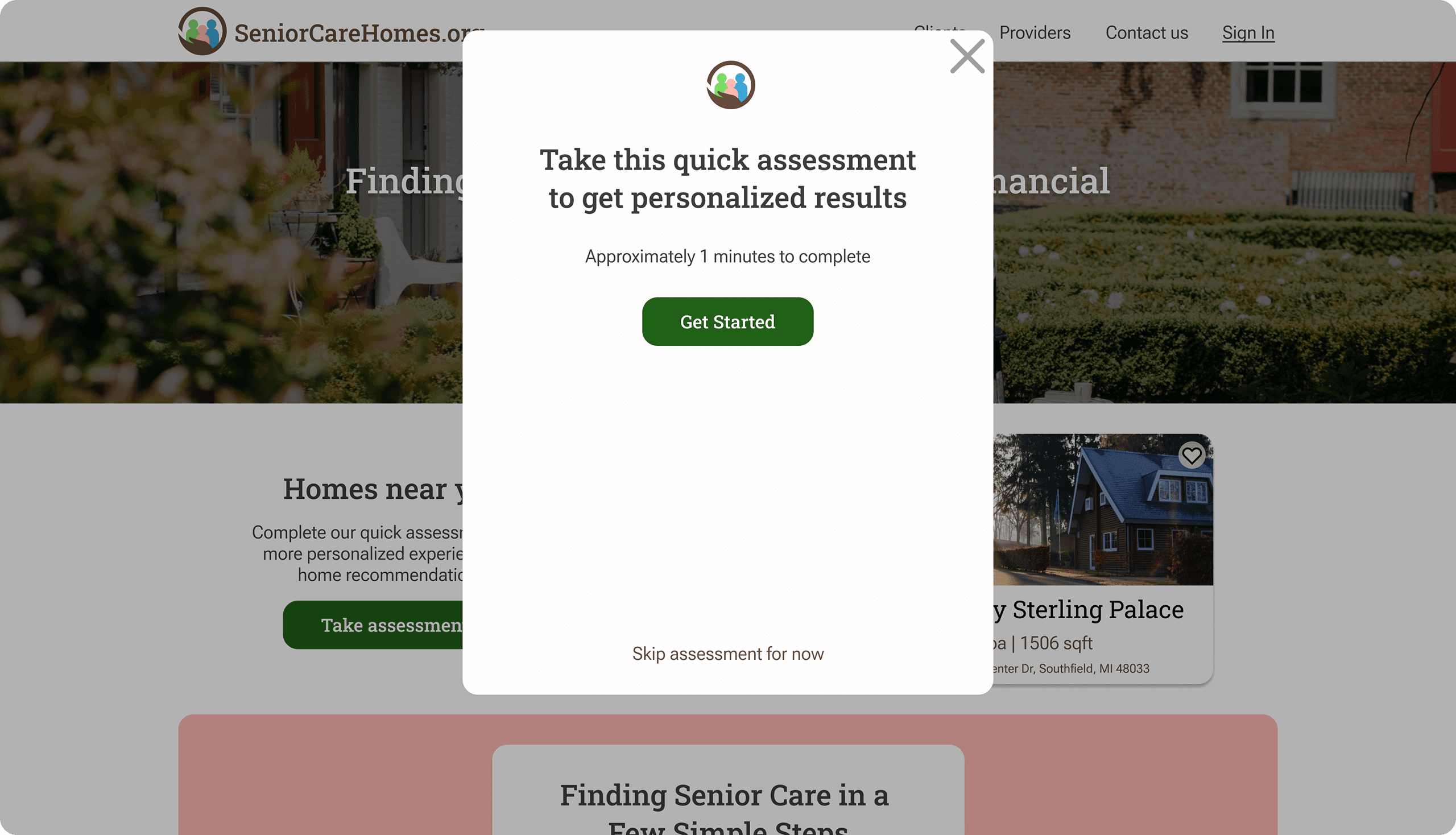
Health Assessment Flow
The final design for the initial 4-question assessment uses large, high-contrast buttons and a single-question-per-screen approach to maximize accessibility. The clear visual separation between the initial and comprehensive assessment reinforces the principle of progressive disclosure, giving the user control over their sensitive health information.


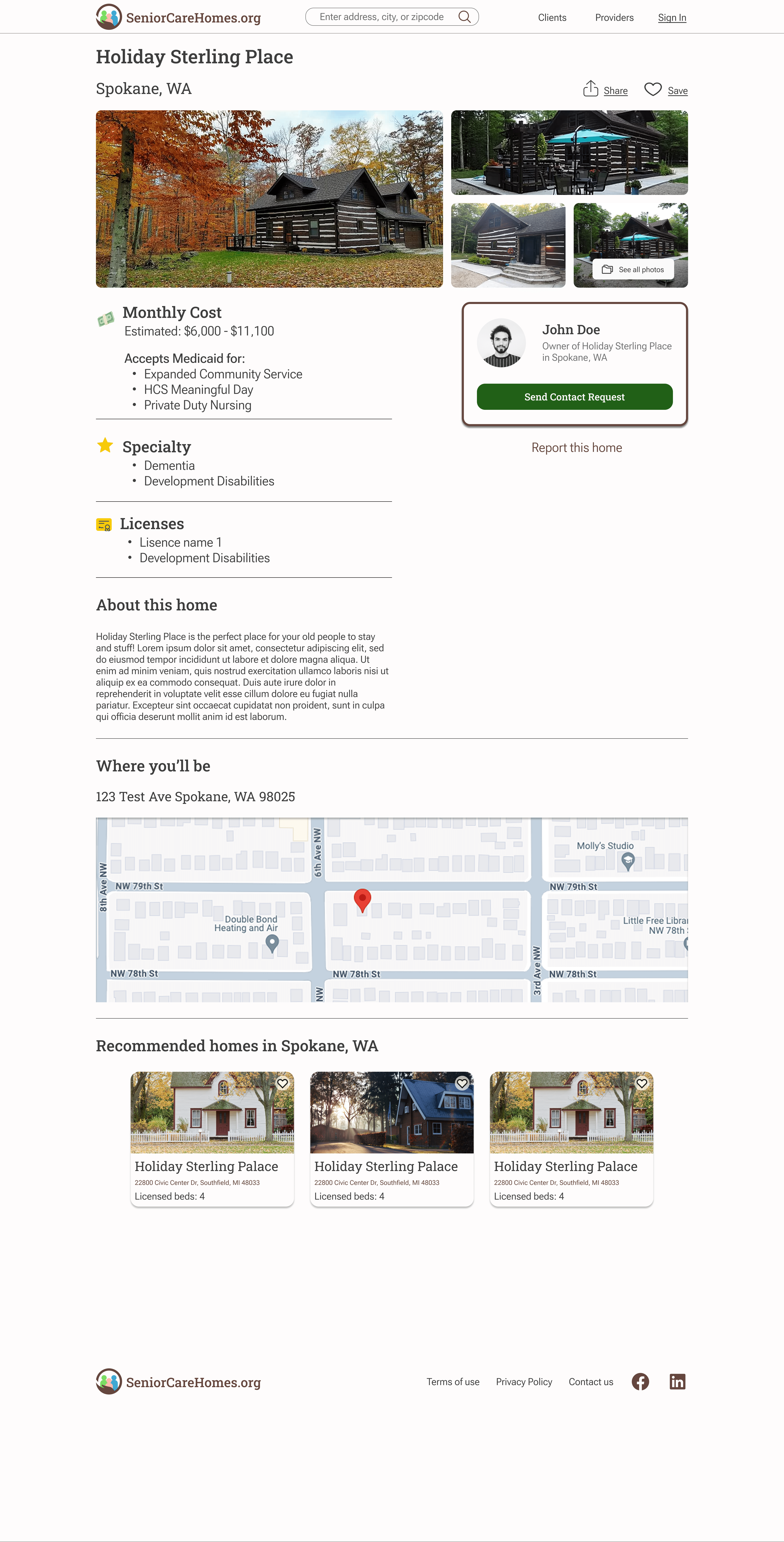
Facility Listings
Listing pages emphasize transparency and trust by clearly displaying the home’s name, location, and pricing alongside rich imagery. An owner badge is prominently featured to signal direct ownership, while a dedicated contact button enables immediate messaging with the owner, reinforcing a clear and agent-free communication experience.
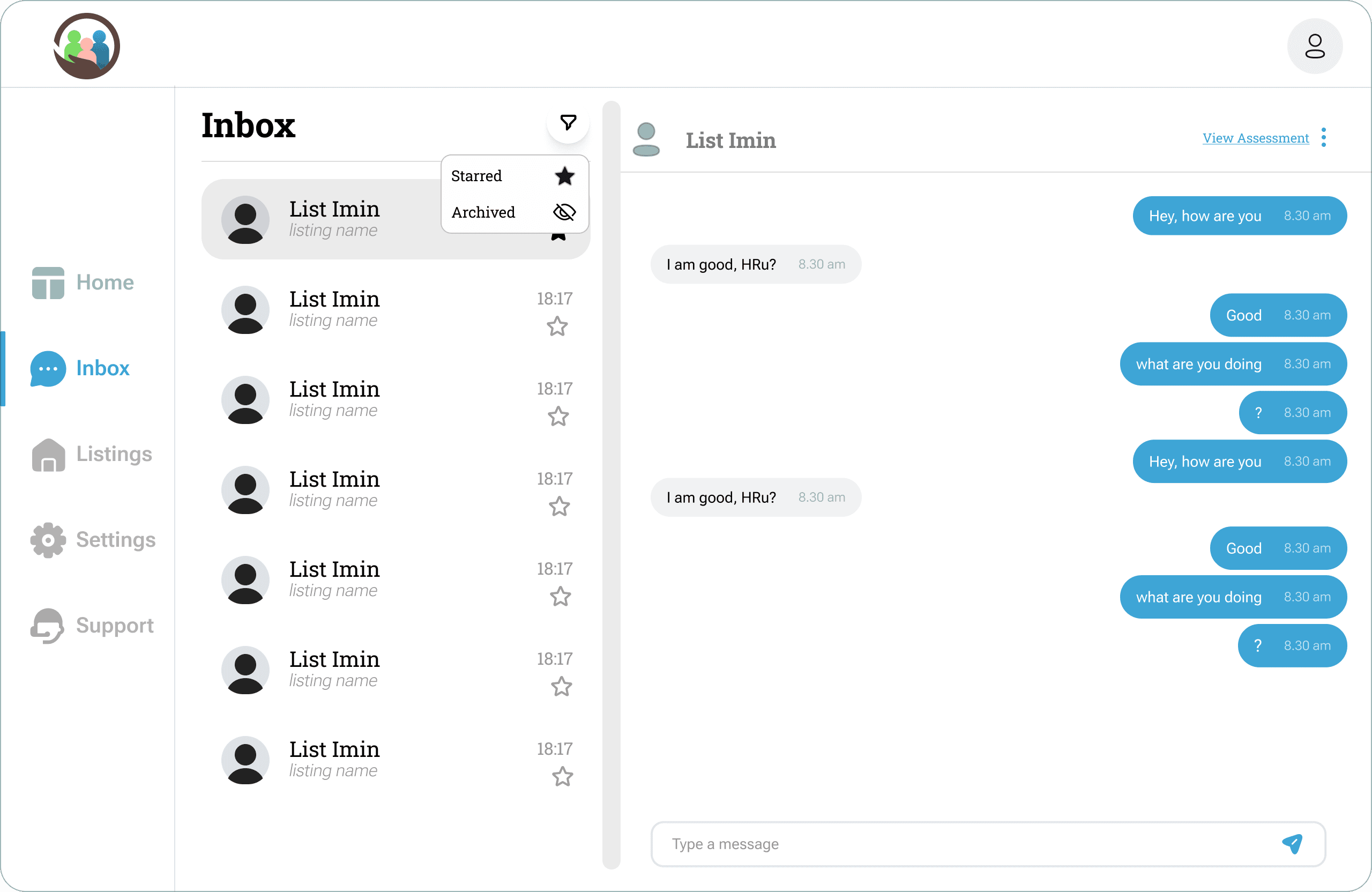
Client Dashboard
This dashboard was designed as the central hub for families, focusing on trust and control. The layout prioritized saved searches, bookmarked facilities, and the communication inbox for direct provider messaging.

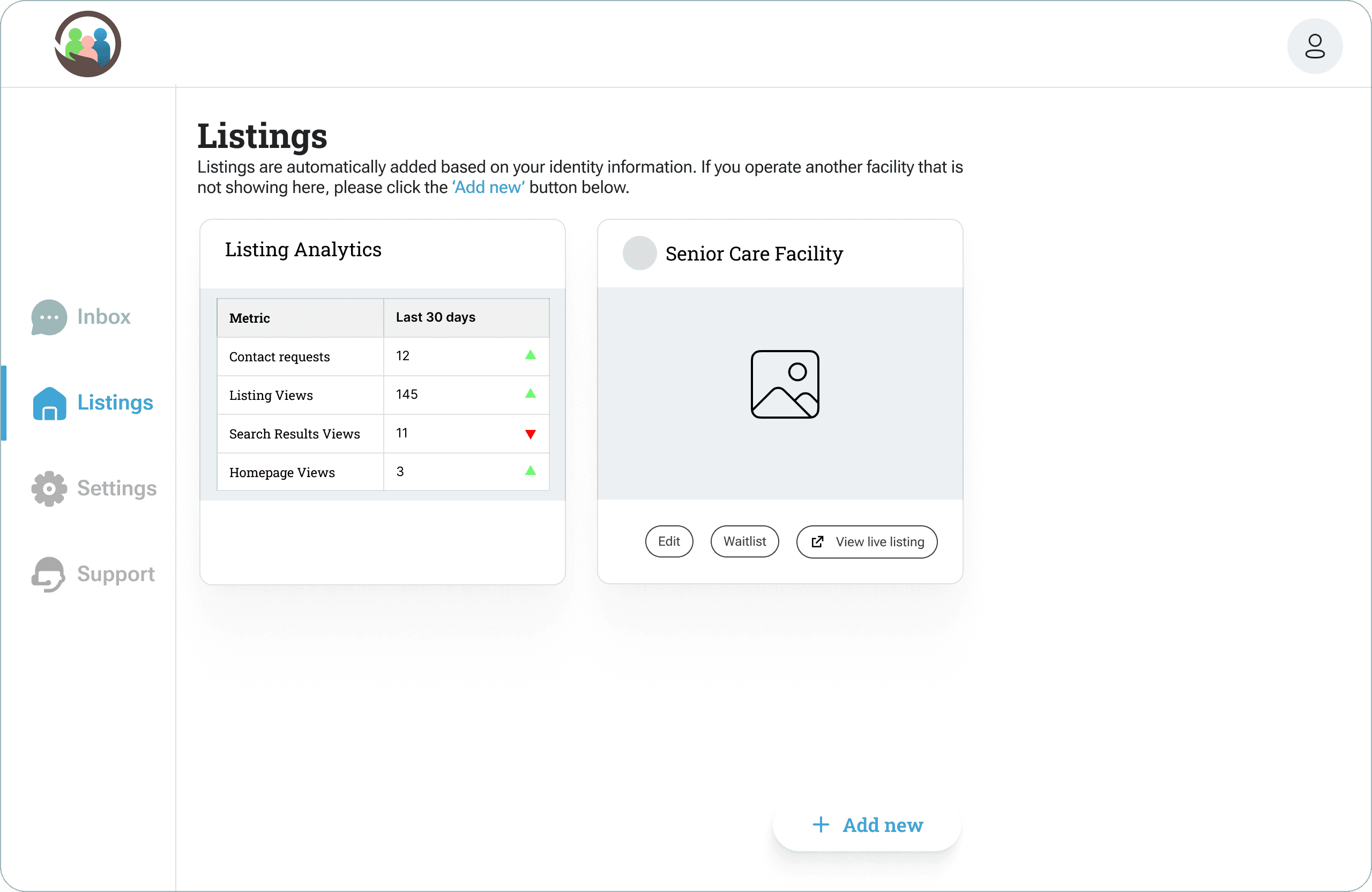
Provider Dashboard
The Provider Dashboard maintains a clean, professional aesthetic for facility managers. Visualizations use the accent color for key performance metrics (e.g., qualified leads received, contact rate), prioritizing data that supports the provider's goal of reduced acquisition costs.

Collaboration & Reflection
Teamwork and handoff
Working remotely within a lean startup environment required extreme adaptability and self-direction. I maintained clear communication through weekly full-team check-ins via Microsoft Teams.
I established a collaborative rhythm when a second designer joined mid-project, dividing responsibilities to maintain momentum while continuously aligning on design direction. I also maintained a close strategic relationship with the company owner.
Design Tool: Figma (for design and developer handoffs)
Communication: Slack (daily) and Teams (meetings)
When a freelance developer was brought on, I ensured a smooth implementation by delivering the high-fidelity prototype with detailed specifications directly through Figma, demonstrating proficiency in readying designs for production.
Key Takeaways and growth
The unique challenges of the startup environment directly strengthened my abilities:
Adaptability & Self-Direction: The lack of rigid structure typical in startups required clear self-direction, a skill that strengthened throughout the project.
Articulating Decisions: Working alongside another designer with a different process pushed me to clearly articulate my design decisions and approach, which taught me who I am as a designer and how to navigate different working styles.
Reflective Practice: Looking back, I would have prioritized a mobile-first design to better serve users searching on the go during facility visits, a critical insight for future projects.
This project showcases my proven ability to adapt to ambiguity, design for accessibility and trust, and grow through collaboration. These are the skills that define how I approach every challenge.
The finished Product
To conclude the project narrative, here is the final, high-fidelity entry point to the Senior Care Homes platform the visual culmination of our 14-month process.